The European
Analytico-Systemic
Hub
The European Analytico-Systemic Hub (EASM) is a London-based academic and clinical platform dedicated to the development of integrative psychotherapy through structured dialogue, advanced training, and professional reflection. Rooted in the Analytico-Systemic model (MAS) and open to interdisciplinary exchange, EASM brings together international contributors in psychiatry, psychotherapy, and systemic thought.
EASM serves qualified practitioners, educators, and advanced trainees, fostering clinical coherence, theoretical clarity, and the responsible evolution of psychotherapy practice within contemporary clinical and institutional contexts.
Next Event
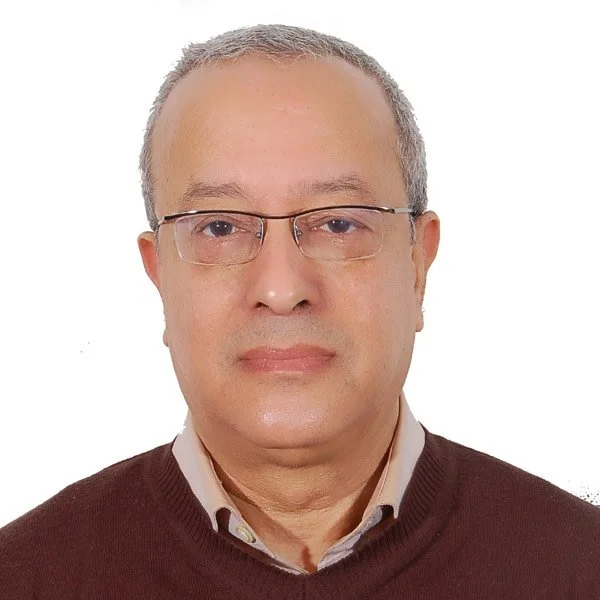
Prof. Kamal Raddaoui
Psychiatrist - Psychotherapist
Vice President of the World Council for Psychotheapy (WCP)
Former Professor of Psychiatry at the Faculty of Medicine in Rabat
International advocate for the integration of psychiatry and psychotherapy.
Full Seminar Title:
The Psychotherapist-Psychiatrist: Integrating the Dual Roles in Diagnosis, Treatment Planning, and the Therapeutic Relationship
Location: Online Webinar - Via Zoom
Date & Time: Wednesday, 21 October| 4pm GMT | 5pm BST
Duration: 1h 30m
Fee: £22
Speaker’s language: French
Our seminars are simultaneously interpreted into English, French and Arabic.
This seminar provides structured, academically grounded learning designed to support Continuing Professional Development (CPD) for qualified practitioners and advanced trainees.
2026 Program
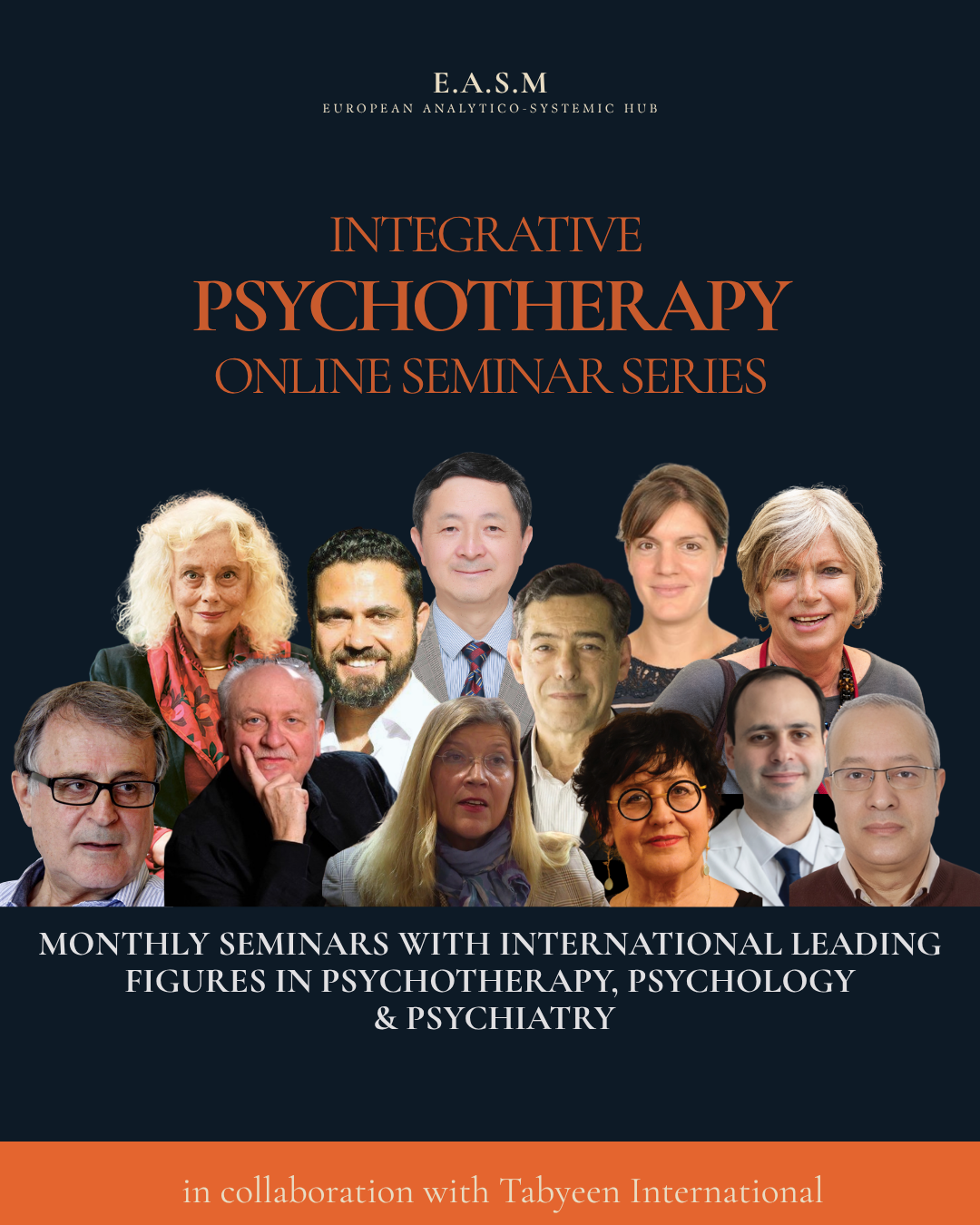
Monthly Schedule
-
Speaker: Tania Bosqui
Dr Tania Bosqui is a Clinical Psychologist, researcher, and Assistant Professor of Psychology at the American University of Beirut, with an affiliation to the Trinity Centre for Global Health at Trinity College Dublin. Her work focuses on child and adolescent mental health, trauma, humanitarian mental health, and the impact of war, displacement, and political violence on individuals, families, and communities. She is internationally recognised for her research on contextual and systemic approaches to psychological suffering and mental health interventions in conflict-affected settings.
Session Title:
Beyond Decontextualized and Symptom-Focused Models: Mental Health and Psychosocial Support for Children and Adolescents in Contexts of War and Political Violence.
The Role of Contextual Factors in Shaping Psychological Suffering and Therapeutic Processes
Session overview:
This session explores the effectiveness of mental health and psychosocial interventions for children and adolescents affected by war and political violence. Drawing on research from conflict-affected settings, it examines the limitations of decontextualized and symptom-focused models and highlights the role of family, community, cultural, and socio-political factors in shaping both psychological suffering and therapeutic processes.
-
Speaker: Kamal Raddaoui
Prof. Kamal Raddaoui is a psychiatrist and psychotherapist based in Rabat, Morocco. A former Professor of Psychiatry at the Faculty of Medicine in Rabat, he is Vice-President of the World Council for Psychotherapy (WCP), Fellow of the American Psychiatric Association, and an internationally active advocate for the integration of psychiatry and psychotherapy.
Session Overview:
This session explores the integration of psychiatry and psychotherapy in contemporary clinical practice. Drawing on his extensive experience as both psychiatrist and psychotherapist, Prof. Raddaoui will examine how clinicians navigate diagnosis, treatment planning, and the therapeutic relationship when multiple explanatory frameworks are involved. Particular attention will be given to clinical decision-making, the articulation of psychiatric and psychotherapeutic interventions, and the challenges of working with complex presentations from an integrative perspective.
-
Speaker: Alain Giami
Alain Giami (PhD) is currently Emeritus Research Professor at the Inserm (National Institute of Health and Medical Research) in Paris. He is the previous Vice President of the World association for Sexual Health and Associate editor of the journal “Sexologies: European Journal of sexology and sexual health”.
He served as a full member of the International Academy of Sex Research since 1994 and also as an expert in various task force at the World Health Organization, UNESCO, the French Supreme Court (Conseil d’Etat) and the French Ministry of Health. He created and developed a University Diploma on “Sexual health and Public Health at Paris University (Paris 5 and Paris 7) (2007-2014). He served as Scientific Director at the UNESCO Chair in Sexual health and Human rights (2010-2014).Session overview:
Sex therapy is a specialised form of psychotherapy addressing sexual difficulties, sexual violence and trauma, and other complex issues, sometimes involving couples therapy. Yet working clinically with sexuality extends far beyond technical expertise: sexual experiences are deeply shaped by cultural, moral, and religious meanings, bringing the clinician’s own values, attitudes, and countertransference into the therapeutic encounter. In this session, Professor Alain Giami will explore why justice, alongside autonomy, dignity, self-determination, freedom, and beneficence, is central to ethical practice in sex therapy. Rather than offering definitive answers, the intervention will open critical and guiding questions for clinicians to reflect upon and take into supervision.
-
Speaker: Rony Abou Daher
Founder and Director of London Mind Rise. Director of EASM. Abou Daher is an Analytico-Systemic Therpaist, supervisor and trainer, an IPT therapist, a systemic therapist and a Mental Health and Psychosocial Support (MHPSS) Consultant.
Session overview:
Despite decades of theoretical innovation and model development, research increasingly suggests that therapeutic outcomes are shaped by factors that extend beyond specific techniques and treatment protocols. This seminar will provide a critical overview of international research that has transformed our understanding of therapeutic effectiveness. Participants will explore the evidence surrounding common factors, therapeutic relationships, therapist effects, feedback-informed practice, and mechanisms of change. The session will help clinicians identify the variables most strongly associated with positive outcomes and develop a clearer understanding of where to focus their professional growth to maximise therapeutic impact.
-
Speaker: Prof. Xudong Zhao
Psychiatrist, professor at Tongji University School of Medicine, and President of the World Council for Psychotherapy. He directs the Division of Medical Humanities at Tongji University and is a leading figure in cultural psychiatry and psychosomatic medicine in China. His work focuses on the cross-cultural development of psychotherapy and the integration of systemic models within diverse cultural contexts.
Session Overview
This session explores psychotherapy as a culturally situated clinical practice and examines the challenges of translating therapeutic models across societies. Key themes include:The cultural adaptation of systemic and relational psychotherapies in different clinical environments.
The interaction between cultural frameworks, psychological theory, and therapeutic practice.
The implications of cultural translation for the global development of integrative psychotherapy.
-
Speaker: Prof Martine Nisse
Nisse is a family therapist, trainer, and supervisor of multidisciplinary and multi-institutional teams in France, Europe, and Asia. She is the co-founder and director of the Centre des Buttes-Chaumont in Paris. She has served as a lecturer at the Faculty of Medicine of Grenoble Alpes, in psychology at Paris VIII, and in social work at New York University. She is a member of the Board of the European Family Therapy Association and a member of the Asian Academy of Family Therapy.
Session overview:
Network-based family therapy for incestuous systems involves entering into the confusion generated by incestuous homeostasis and its strong resistance to change.
The more confused the communication, the more it neutralises attempts at care; the more communication becomes clear, the more children begin to speak, becoming aware of the importance of words. Destabilising the linguistic routines of practitioners, and paying meticulous attention to vocabulary, allows children to reflect on relationships, distinguishing between love and hate.
Deciphering the psychological contamination of the practitioner’s thinking by the incestuous system enables emotional expression and helps resolve resonance. Work with the system-analytic genogram structures the stages of the judicial process. Therapeutically authorising the expression of a legitimate right to hate—through the use of nicknames that caricature the aggressor—reduces the impact of fear and supports post-traumatic growth.
Professionals are often struck by how quickly these distressed, sometimes highly oppositional children show a desire to return to therapy. They are frequently surprised by this rapid progress, to which they have contributed—sometimes without fully realising it.
It is precisely their engagement and their capacity to question their own linguistic routines that contribute to the resilient synchronisation of this newly co-constructed, temporary system.
-
Speaker: Dr. Yaman Makké
Dr. Yamane Makke is an Assistant Professor of Neurology and Vice Chair for Education at The George Washington University. He specializes in epilepsy and Functional Neurological Disorder (FND), serves as Director of the Epilepsy Fellowship Program, and leads the multidisciplinary FND Clinic.
He completed medical school at the American University of Beirut, followed by a research fellowship in epilepsy at AUB under Ahmad Beydoun. He completed his neurology residency at The George Washington University, an epilepsy fellowship at Mayo Clinic Rochester, and a Clinical Neurophysiology fellowship at Vanderbilt University.
His clinical and research interests focus on functional (psychogenic) non-epileptic seizures and multidisciplinary approaches to FND care.
Session Overview
This session examines the dialogue between neuroscience and psychotherapy in understanding psychological suffering. It will inform clinicians on how to:1. Differentiate with precision—not assumption
Learn how to recognise when seizure-like presentations fall within Psychogenic Non-Epileptic Seizures rather than epilepsy—and how to position your intervention accordingly, without over-psychologising or mislabelling.2. Work effectively at the brain–mind interface
Move beyond “psychological causes” and develop a clinically usable understanding of Functional Neurological Disorder—integrating neurobiological insight into how you assess, formulate, and intervene.3. Intervene within a multidisciplinary system—not in isolation
Strengthen your ability to collaborate with neurologists:
– align language and formulation
– support diagnostic acceptance
– reduce iatrogenic confusion and resistance
– improve continuity of careThis session is about clinical positioning, diagnostic clarity, and therapeutic effectiveness in complex presentations requiring multidisciplinary intervention.
-
Speaker: Prof. Umberta Telfener
Clinical and health psychologist. Has been an adjunct professor at the Roma University La Sapienza, at the Post Graduate Health Psychology 4 years Course for 20 years. She has taught "Epistemology" and "Clinical Systemic Intervention". Responsible for Foreign relations for the Milan School of Family Therapy.
Session Overview
This session introduces constructivist epistemology as a framework for understanding therapeutic change within systemic practice. Core ideas include:How therapists co-construct meaning within relational and contextual systems.
The role of reflexivity and observer position in systemic clinical work.
The contribution of constructivist thinking to integrative psychotherapy models that bridge systemic, psychological, and social perspectives.
-
Speaker: Prof. Pierre Canouï
Psychiatrist and child psychiatrist, Doctor of Medical Ethics at the Paris Descartes University, and Honorary President of the Fédération Française de Psychothérapie et Psychanalyse. Former hospital practitioner at Necker-Enfants Malades Hospital in Paris, he has contributed extensively to clinical work in liaison psychiatry and psychosomatic care. His work explores the ethical, humanistic, and integrative foundations of psychotherapeutic practice.
Session Overview
This session explores the ethical and clinical foundations of integrative psychotherapy in contemporary healthcare contexts. It will address:The place of psychotherapy within complex medical settings, particularly in liaison psychiatry and psychosomatic care.
The ethical dimensions of the therapeutic relationship in situations of vulnerability, illness, and existential distress.
How integrative psychotherapeutic approaches support meaning-making and psychological coherence in clinical practice.
-
Speaker: Prof. Mareike Wolf-Fédida
Professor of Clinical Psychopathology and Psychotherapy at Université Paris Cité. Her work develops the dialogue between psychoanalysis, phenomenology, and contemporary clinical practice, with particular attention to embodiment, subjectivity, and the epistemological foundations of psychotherapy. She contributes extensively to theoretical research on psychopathology and to the renewal of psychoanalytic thinking within interdisciplinary contexts.
Session Overview
This session examines how contemporary psychotherapy can sustain a meaningful dialogue with medicine, psychiatry, and the human sciences. Key themes include:The epistemological challenges faced by psychotherapy when engaging with biomedical models of mental health.
How psychoanalytic and phenomenological perspectives illuminate the experience of subjectivity in clinical practice.
The role of integrative thinking in preserving the complexity of psychological suffering within interdisciplinary care.
-
Speaker: Prof. Mareike Wolf-Fédida
Professor of Clinical Psychopathology and Psychotherapy at Université Paris Cité. Her work develops the dialogue between psychoanalysis, phenomenology, and contemporary clinical practice, with particular attention to embodiment, subjectivity, and the epistemological foundations of psychotherapy. She contributes extensively to theoretical research on psychopathology and to the renewal of psychoanalytic thinking within interdisciplinary contexts.
Session Overview:
The sessions explores the horizons that different therapeutic modalities and traditions can open for clients, and the power of initiating the journey towards hem.

Leadership Team.
Chairman of EASM:
A Makké Prof.
Founder of the Analytico-Systemic Model
Vice President of the World Council for Psychotherapy - Mashrèk Representative
President of Tabyeen International
Director of EASM:
R Abou Daher MA.
Trainer, supervisor and practitioner
Monthly Seminars.
The EASM Integrative Psychotherapy Online Seminar Series brings together leading international figures in psychotherapy, psychiatry, and related clinical disciplines, offering a structured academic and clinical forum for dialogue across integrative and systemic approaches.
The series is grounded in rigorous clinical reflection, interdisciplinary exchange, and critical engagement with contemporary theoretical and professional developments in psychotherapy. Delivered in partnership with Tabyeen International, it forms part of the European Analytico-Systemic Hub’s academic and professional activities, contributing to the ongoing articulation and development of integrative clinical frameworks rooted in the Analytico-Systemic Model within the broader international landscape of psychotherapies.
Each seminar provides structured, academically grounded learning designed to support Continuing Professional Development (CPD) for qualified practitioners and advanced trainees. Through engagement with contemporary clinical discourse and cross-disciplinary perspectives, participants may count attendance toward CPD requirements in accordance with the standards of their relevant professional body.